The system
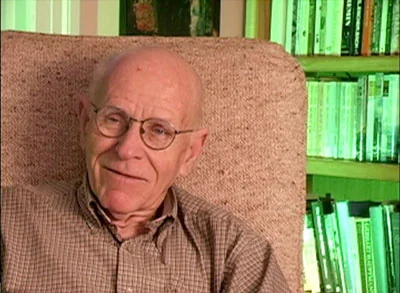
MUSIC was the first in a line of programs Max Mathews wrote at Bell Telephone Laboratories to turn a digital computer into a general-purpose sound generator. Mathews directed Bell Labs' Behavioral Research Laboratory, and by his own account in a 2007 oral history, he was asked as early as 1954 whether a computer could make music at all; the work that became MUSIC, then the successive Music 2 and Music 4 programs, began around 1957. The premise, in Mathews's own 1963 Science article, was that any sound a listener can perceive can be built from a long enough sequence of numbers converted to an analog waveform.
What the documents establish
The Science paper describes the conversion concretely: a computer such as the IBM 7090 could compute roughly 5,000 numbers a second for a complex sound, with sampling rates up to 30,000 numbers a second giving a usable bandwidth around 5,000 cycles, run through a digital-to-analog converter, a filter and a loudspeaker. It positions Bell Labs against contemporaries, naming Lejaren Hiller's rule-based Illiac Suite as the extreme of full machine automation and citing the RCA synthesizer and a University of Illinois machine as alternative hardware routes to computer sound. The oral history adds that the Bell Labs work preceded the Buchla and Moog synthesizer era, and that Mathews later worked with John Chowning at Stanford on the FM synthesis technique Yamaha licensed for the DX7.
Craft and rights
Mathews was explicit that a composing program can sit anywhere on a spectrum: fully automated, a collaborator a human steers, or a pure playback instrument for notes specified down to the parameter. That framing separates capability from result in the way this site insists on: a program able to generate any waveform says nothing, on its own, about who authored a given piece, only about what tools were available to whoever made the decisions. Because MUSIC was internal research software rather than a commercial release, no licence terms attach to it; the question it raises is procedural, over who is credited when software one person built is played by another.
Outcomes and open questions
Neither source here gives a full technical account of what changed between Music 2 and Music 4, so claims about specific added features in later versions should be checked against the original Bell System Technical Journal papers, not assumed. What is established is the trajectory and its motivating idea, sound as numbers, not a version-by-version feature list.
- Does a claimed synthesis lineage trace to a document that actually describes the mechanism, or only to a name-check?
- When software is research infrastructure rather than a released product, who counts as its user for authorship purposes?
- What did contemporaries on other hardware, such as the RCA synthesizer, do differently from the numbers-to-waveform approach?
The lasting claim in Mathews's own words is modest and precise: a computer that can turn arbitrary numbers into any perceivable sound becomes a musical instrument whose real limits are cost and imagination.
Sources & reading trail
Mathews's own account, published in Science on 1 November 1963, of converting numbers to sound and of Bell Labs' composing-program research.
Source published: 1 November 1963 · Retrieved: 16 September 2026
Mathews's own account of being tasked in 1954 with the question, the 1957-onward Music 2 and Music 4 programs, and his later work with Chowning.
Source published: 29 March 2007 · Retrieved: 16 September 2026
Papers, reports and standards establish the entry; the craft-and-rights reading is Soundcraft AI editorial analysis. This retrospective draft does not imply the site published on the event date.