The system
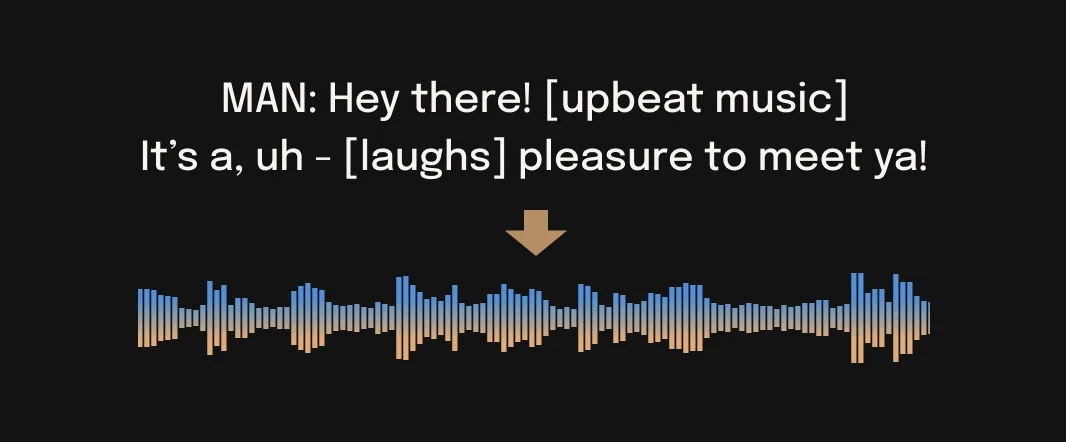
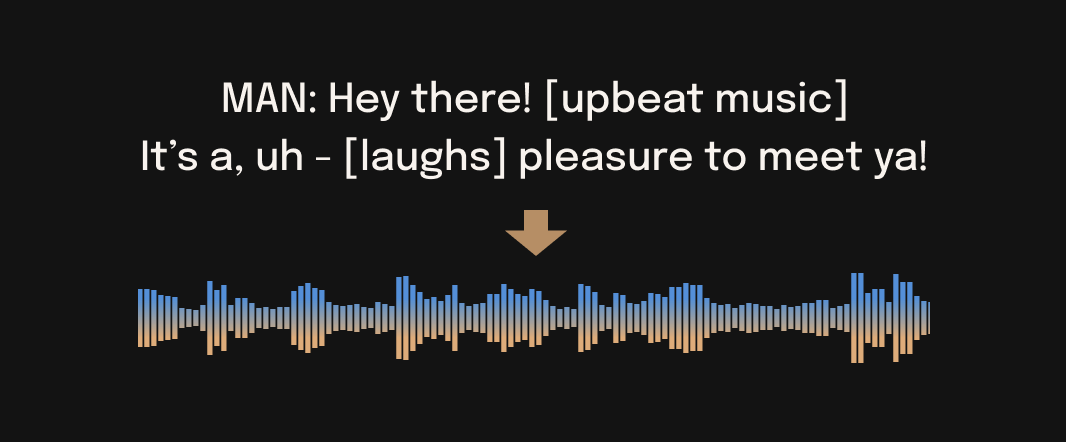
Bark is a transformer-based text-to-audio model that Suno released as open source on GitHub on 20 April 2023, months before Suno's own consumer song-generation product became widely known. The repository and its mirrored Hugging Face model card describe it as capable of generating realistic, multilingual speech plus other audio — music, background noise, simple sound effects, and nonverbal sounds like laughing or sighing — from a text prompt, without an intermediate phoneme step.
What the documents establish
The repository states Bark follows a GPT-style architecture similar to AudioLM and VALL-E, using a quantised audio representation from Meta's EnCodec codec, and that it was developed for research purposes as a fully generative model that can deviate from a given script in unexpected ways. The changelog records that Bark shipped under a research-only licence at its 20 April 2023 release and was relicensed under the permissive MIT licence eleven days later, on 1 May 2023, a change the Hugging Face model card's licence field now reflects as well. Neither document discloses what audio or text data trained Bark, a gap both pages leave unaddressed rather than partially answered.
Craft and rights
The repository's most direct statement for a reader evaluating Suno's later products is its own opening notice: Bark is described explicitly as Suno's open-source text-to-speech-plus model, distinct from the company's text-to-music systems, and the repository points visitors elsewhere for those. Treating Bark and Suno's commercial song generator as the same underlying model is not supported by either document. The absence of a training-data disclosure is the rights-relevant gap here: a permissive code licence controls how the software may be reused, but it says nothing about what recordings or text shaped the model's outputs, which is a separate and unanswered question in both sources.
Outcomes and open questions
The MIT relicensing made Bark usable commercially within eleven days of release, an unusually fast licence change worth noting as a data point on how quickly open-source terms can shift. What is not established by either document is whether any component of Bark's architecture or training approach carries forward into Suno's separately built commercial models; the repository does not make that claim in either direction.
- Does a permissive code licence tell you anything about the training data behind the weights it covers?
- Could a model's licence terms change again after you have already built on a specific version?
- Is a research demo you are evaluating the same system, or only related in name, to a company's commercial product?
Bark is best read as a research release with an unusually fast path to a permissive licence, not as a documented preview of Suno's commercial song-generation model.
Sources & reading trail
States the GPT-style/EnCodec architecture, the 20 April 2023 release and 1 May 2023 MIT relicensing, and that Bark is distinct from Suno's text-to-music systems.
Source published: 20 April 2023 · Retrieved: 16 September 2026
Confirms the MIT licence on the mirrored model weights, as the page reads on 16 September 2026.
Source published: Not established · Retrieved: 16 September 2026
Papers, reports and standards establish the entry; the craft-and-rights reading is Soundcraft AI editorial analysis. This retrospective draft does not imply the site published on the event date.