The system
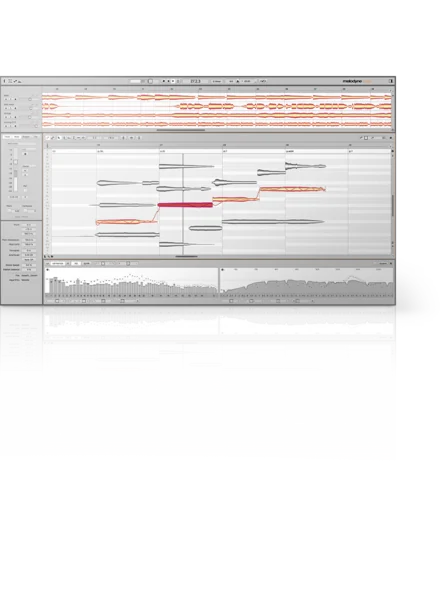
Melodyne is Celemony's pitch-and-time editing software, first shown publicly in 2001, years before it could edit chords rather than single notes. Celemony's own company history credits founder Peter Neubäcker with beginning the concept in 1997, founding Celemony in 2000, and presenting Melodyne 'for the first time at the Winter NAMM' in 2001, well before the Direct Note Access feature that let it handle polyphonic material.
What the documents establish
A contemporaneous Sound On Sound review from November 2001 describes hands-on use of that first version and is specific about its limits: Melodyne 'can shift the pitch of monophonic audio without changing duration, change duration or tempo with or without changing pitch, and manipulate formants,' letting a user 'create harmonies from one vocal' or reshape a melody, and it could process drum loops and strummed guitar despite generally needing monophonic material. The reviewer warns that reverb 'essentially provides an aural simulation of polyphony' that could break the software's pitch detection, underlining how strict the monophonic requirement was. Celemony's own history dates the polyphonic breakthrough separately: DNA, Direct Note Access, was demonstrated at the 2008 Frankfurt Musikmesse and released commercially in 2009, described on the company's page as 'a milestone in recording technology' because it let a user edit individual notes inside a chord for the first time.
Craft and rights
The eight-year gap the company's own timeline records, between the 2001 monophonic tool and the 2009 polyphonic one, is a useful corrective to any claim that treats 'Melodyne' as a single stable feature set; a producer working with a 2001-era description would have had no way to correct pitch inside a recorded chord at all. Because Melodyne edits audio a user already owns rather than generating new material from a trained model, the rights question it raises has always been narrower than a generative system's: whether an edited vocal or instrumental take still counts, contractually or credit-wise, as the original performer's work once its pitch and timing have been reshaped this thoroughly.
Outcomes and open questions
Both sources here describe capability, not adoption; neither document establishes how quickly producers began relying on the original monophonic tool, only what it could and could not do the year it launched.
- Does a described Melodyne capability belong to the original 2001 monophonic tool or to the 2009 Direct Note Access version?
- What does a contemporaneous hands-on review reveal about a tool's real limits that a later marketing history tends to smooth over?
- Once a recorded performance's pitch and timing have been reshaped this extensively, what should that mean for how the performance is credited?
Read together, the two sources fix a precise before-and-after: a 2001 tool that reshaped one voice at a time, and a company timeline that waited until 2009 to let it touch a chord.
Sources & reading trail
Company's own timeline: 1997 concept, 2000 founding, 2001 Winter NAMM debut, and the 2008-2009 Direct Note Access milestone.
Source published: Not established · Retrieved: 16 September 2026
Contemporaneous November 2001 hands-on review documenting the original version's strict monophonic-audio requirement and capabilities.
Source published: 1 November 2001 · Retrieved: 16 September 2026
Papers, reports and standards establish the entry; the craft-and-rights reading is Soundcraft AI editorial analysis. This retrospective draft does not imply the site published on the event date.